Discover Our Yarra Valley Premium Wine & Dine Tour
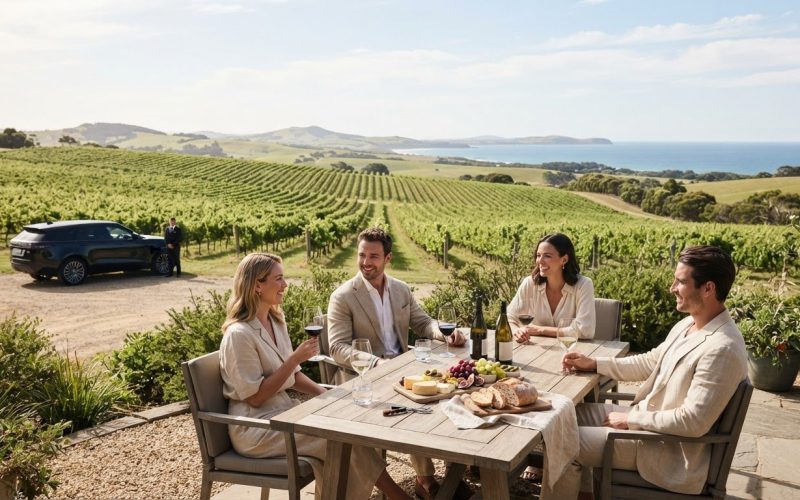
The best day among mornington peninsula vineyards isn’t the one that squeezes in the most cellar doors. It’s the one that leaves time to savour the wines, enjoy the scenery and travel between tastings without watching the clock.
Coastal influences, varied microclimates and rolling vineyard country give the Peninsula a distinctive cool-climate character. Pinot Noir and Chardonnay are leading varieties, but choosing where to stop can feel less straightforward when you’re weighing up different areas and tasting experiences. If you’re planning several tastings, deciding who’ll drive is also part of making the day enjoyable.
This guide explains the region’s wine identity, what to look for in the glass and how to choose cellar-door visits that suit your interests and available time. You’ll also find practical planning advice, including how a private tour with a professional driver can make getting between vineyards easier. Use it as a starting point for a relaxed Peninsula tasting day, with room to linger.
Key Takeaways
- Learn how the Peninsula’s maritime setting and varied vineyard sites shape its cool-climate wines.
- Use the comparison of mornington peninsula vineyards to narrow down areas and tasting experiences that suit your interests.
- Find out which wine styles to look for, including the region’s recognised Pinot Noir and Chardonnay.
- Build a more relaxed cellar-door itinerary by grouping nearby stops and checking opening hours, tasting arrangements and booking requirements.
- Weigh the flexibility of self-driving against the comfort of private transport when planning a day with multiple tastings.
What makes Mornington Peninsula vineyards distinctive?
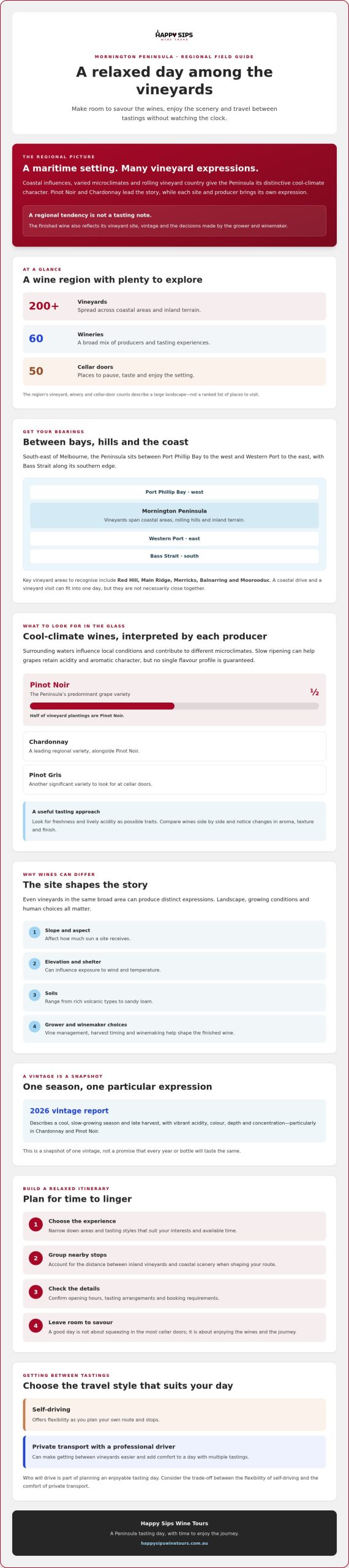
The Mornington Peninsula is a Victorian wine region shaped by its maritime setting, varied vineyard sites and cool-climate growing conditions. It’s particularly known for Pinot Noir and Chardonnay, although wines can differ from one site and producer to another. The combination of coastal influence and local variation gives the region more to explore than a single signature style.
Vineyards are part of a broader destination. You can pair cellar-door visits with coastal scenery, beaches and local food, making a tasting day feel like a Peninsula outing rather than a winery-only itinerary. The region has over 200 vineyards, 60 wineries and 50 cellar doors, so understanding the landscape can help you choose where to stop. This guide provides regional context and practical planning ideas, rather than a ranked list of wineries.
Where are the Mornington Peninsula vineyards?
South-east of Melbourne, the Peninsula sits between Port Phillip Bay to the west and Western Port to the east, with Bass Strait along its southern edge. Vineyards aren’t all coastal: some are inland, among rolling hills and varied terrain. Keep that in mind when planning your route. A coastal drive and a vineyard visit can be part of the same day, but they aren’t necessarily close together.
For an at-a-glance orientation, use a map that shows the Peninsula, its bays and key vineyard areas such as Red Hill, Main Ridge, Merricks, Balnarring and Moorooduc. The Mornington Peninsula wine region overview provides a useful starting point for understanding the area’s geography and wine background.
Why is the region associated with cool-climate wines?
Surrounding waters influence local conditions and contribute to a range of microclimates across the Peninsula. In general, cool-climate growing conditions can allow grapes to ripen slowly, helping retain acidity and aromatic character. But the region isn’t one uniform vineyard. A site’s aspect, elevation, shelter and soil can all shape how its vines grow and how its wines taste.
Pinot Noir is the Peninsula’s predominant grape variety, accounting for half of plantings, while Chardonnay and Pinot Gris are also significant. These are useful styles to look for, not a promise that every cellar door makes the same wines. As you taste, notice how each producer interprets the varieties. That variation is part of the pleasure of exploring the Peninsula.
How climate, soils and vineyard sites shape Peninsula wines
Cool-climate describes the conditions in which grapes grow, not a guaranteed flavour profile. Across the Mornington Peninsula, maritime influences can contribute to a slower ripening season, helping grapes retain acidity and develop aromatic character. But a regional tendency isn’t a tasting note: the finished wine also reflects its vineyard site, vintage and the decisions made by the grower and winemaker.
Maritime conditions help shape the Peninsula’s wine character, while each vineyard site and vintage give that character a different expression. The 2026 vintage report describes a cool, slow-growing season and late harvest, with vibrant acidity, colour, depth and concentration, particularly in Chardonnay and Pinot Noir. That’s a snapshot of one vintage, not a promise that every year or bottle will taste the same.
What does cool-climate wine mean for visitors?
When tasting, look for freshness and lively acidity as possible traits, rather than assuming every wine will be light-bodied or taste alike. Pinot Noir and Chardonnay are strongly associated with the region, but producers can interpret them in different ways. Compare wines side by side and notice changes in aroma, texture and finish. The Mornington Peninsula Vignerons Association is a useful regional reference for exploring the local wine community and its producers.
Why can nearby vineyards produce different wines?
Even vineyards in the same broad area can differ. Slope and aspect affect how much sun a site receives, while elevation and shelter can influence exposure to wind and temperature. The Peninsula’s geology also varies, with soils ranging from rich volcanic types to sandy loam. These are regional features, not a formal classification that predicts exactly how a wine will taste.
Viticulture principles help explain the possibilities, but site conditions and human choices work together. Growers decide how to manage vines and when to harvest, and winemakers make further choices that shape the finished wine. Two Pinot Noirs from the same vintage can still offer distinct expressions. That’s part of the appeal of tasting across the region’s mornington peninsula vineyards.
At a cellar door, ask which vineyard site and vintage a wine comes from, then ask the team what makes it distinctive. A simple question can bring the glass to life. If you’d rather focus on tasting than driving between stops, consider a customised private Mornington Peninsula wine tour with professional passenger transport.
Mornington Peninsula vineyard areas and wines: how to compare them
There isn’t one area that suits every visitor, and place names alone won’t tell you exactly what a wine will taste like. Use the areas below as a starting point, then compare individual cellar doors by their current tastings, setting and travel logistics. The Peninsula’s recognised varieties include Pinot Noir, Chardonnay and Pinot Gris. Shiraz and Viognier also feature among its wines.
| Area | Broad location | How to think about a visit |
|---|---|---|
| Red Hill | Inland, among the Peninsula’s central hills | Consider it if you’d like to build a day around vineyard scenery. Check cellar-door access and tasting options before setting your route. |
| Main Ridge | Inland, in the southern part of the Peninsula | Compare it with nearby stops to keep driving manageable; confirm which producers welcome visitors on your chosen day. |
| Merricks | Western side of the Peninsula | Useful to consider for an itinerary that also takes in the western side. Check distances between your chosen cellar doors. |
| Balnarring | Western side, north of Merricks | Look at current cellar-door options and pair a tasting with other nearby regional interests if they suit your plans. |
| Moorooduc | Northern part of the Peninsula | May suit a route focused on the north. Confirm opening hours and travel times rather than assuming stops are close together. |
Which wine styles should you look for?
Start with Pinot Noir and Chardonnay, then explore Pinot Gris or other varieties on the tasting list. The region also produces Shiraz and Viognier, so there’s room to follow your own preferences. Tasting notes can help you choose, but treat descriptions as clues, not rules: style varies by producer, site and vintage. Try contrasting wines and ask what the team attributes to the vineyard or growing season.
How do you choose an area for your visit?
First, decide what you want from the day: a focused tasting, a scenic drive, a meal or time for other regional experiences. Then shortlist cellar doors that match, check their visitor details and map the route. Avoid packing in stops across distant areas without allowing time to travel and linger. For broader Victorian wine-region context, see this Melbourne winery tour regional guide.
If you’d prefer professional transport while visiting multiple cellar doors, explore this Mornington Peninsula private wine tour guide. It’s one planning option, not a substitute for checking each venue’s current opening hours, tasting arrangements and booking requirements.
How to plan a relaxed Mornington Peninsula cellar-door visit
A little planning makes it easier to enjoy each stop instead of racing between them. Start with what you’d like from the day, then build a route around venues and transport that suit your group. A shorter, well-spaced itinerary can leave time to ask questions, savour a tasting or enjoy a meal.
- 1. Choose your interests. Decide whether the day is mainly about particular wine styles, vineyard scenery, food or a mix of regional experiences. This gives you a useful filter when comparing cellar doors.
- 2. Check directly with each venue. Confirm current opening hours, tasting availability, booking requirements, accessibility and group policies. Check whether food is served or if you’ll need to make separate arrangements.
- 3. Group nearby stops. Use a map to check distances between your chosen venues and allow realistic time for driving, tastings and breaks. Avoid treating the day as a checklist to complete.
- 4. Arrange transport. Decide in advance who’ll drive, or consider professional private transport if your group wants to visit multiple cellar doors without one person having to drive.
Before you go: confirm bookings, arrange transport and check each venue’s current visitor details.
What should you check before visiting a cellar door?
Venue details can change, so use each cellar door’s current information rather than an old itinerary or third-party listing. Check the tasting format and whether you need to book, especially if you’re visiting as a group. Ask about accessibility if it matters to anyone in your party. If lunch is part of the plan, confirm the food offering and whether a separate reservation is needed. Leave enough time for travel and the tasting itself.
When is a good time to visit Peninsula vineyards?
The best date depends on the experience you want, and seasons don’t guarantee particular weather or vineyard activity. Check the forecast closer to your visit and look at venue calendars for current opening hours, events and tasting arrangements. Weekends and seasonal events may affect availability, so confirm plans directly with the cellar doors before setting out.
If you’d like help organising a day around your interests, explore a customised private Mornington Peninsula wine tour with professional passenger transport. It can take the driving logistics off your hands while you enjoy the visit.
Choose the right way to explore Mornington Peninsula vineyards
How you get between cellar doors can shape the feel of your day. Self-driving gives you direct control over your route and timing. Private transport can make a multi-stop tasting day simpler by taking navigation and driving logistics off your plate. The right fit depends on your group, preferred pace and whether someone is happy to drive.
Is self-driving or private transport a better fit?
Self-driving may suit you if you want to set your own itinerary, make spontaneous changes and have a designated driver. You’ll need to plan the route, allow for travel between venues and make sure the day’s tastings fit your arrangements.
With private transport, your group can focus more on the visits and less on directions, parking and coordinating each leg. It can be a comfortable option for visiting several cellar doors, particularly if nobody in your group wants the driving role. It won’t suit every itinerary, though. Consider your preferred stops and pace, then decide which approach gives you the flexibility you want.
What should you ask before arranging a private vineyard tour?
Before booking, make sure the arrangement fits your day. Ask whether the itinerary can reflect your preferred wine styles, group interests and desired pace. Confirm pickup arrangements, whether the transport suits your group and exactly what the tour includes. Check any proposed cellar-door visits directly with the venues, including their current opening hours, tasting arrangements and booking requirements.
Happy Sips Wine Tours is a Melbourne-based, family-owned operator offering customised private wine tours on the Peninsula with professional passenger transport. Its tours are private, not shared, and the business doesn’t offer self-drive rentals. If you’d value a driver and a tour shaped around your group, you can explore private Mornington Peninsula wine tours.
There’s no single right way to discover the region. Choose self-driving if direct control is your priority and you’ve arranged who’ll drive. Consider private transport if you’d rather leave the driving logistics to someone else. Either way, a considered route and a pace that leaves room to enjoy each stop can make your vineyard day feel far more relaxed.
Plan a Peninsula tasting day at your own pace
The most rewarding day among mornington peninsula vineyards starts with choosing what you want to discover, then allowing enough time to enjoy it. The region’s maritime setting and varied vineyard sites help explain why wines can differ. Comparing areas by your interests, cellar-door access and travel distance makes it easier to shape a realistic route.
Check each venue’s current details before you go, and decide early how you’ll get between tastings. Self-driving can suit a group with a designated driver; private transport offers another way to enjoy the day without managing the navigation yourself.
For a more tailored outing, Happy Sips Wine Tours is a Melbourne-based, family-owned and operated business offering customised private wine tours with professional passenger transport. Depending on the experience, curated outings can include winery visits, food tastings, gin experiences or private hot springs tours. Confirm the details that matter to your group directly with the operator.
Explore a private Mornington Peninsula wine tour and start planning a relaxed day of tasting, discovery and Peninsula scenery.
Frequently Asked Questions
What wine is Mornington Peninsula best known for?
The Mornington Peninsula is best known for Pinot Noir, with Chardonnay another leading variety. Pinot Noir accounts for half of the region’s grape plantings, and Pinot Gris is also significant. These are useful styles to begin with, not a guarantee that every producer makes the same wines. At cellar doors, compare different producers and vintages, and ask staff what influences the wine’s character.
When is the best time to visit Mornington Peninsula vineyards?
The best time depends on the experience you’re after and the dates that suit you. Summer is a popular period for visiting the Peninsula, so check availability and book ahead where required. Other seasons bring different vineyard and landscape conditions, but weather and winery activity can vary. Before settling on a date, check the forecast and the current calendars of the cellar doors you’d like to visit.
Can you visit Mornington Peninsula vineyards without a booking?
Sometimes, but don’t assume a cellar door will accept walk-ins or have space for your group. Booking requirements and tasting arrangements vary by venue and can change. Check each cellar door’s current visitor information directly before travelling, especially if you’re visiting on a weekend, during a seasonal event or as a group. Confirm opening hours, tasting availability and whether food needs a separate booking.
How many wineries should you visit in a day on the Mornington Peninsula?
There’s no fixed ideal number. Choose a manageable itinerary based on the distance between venues, tasting times, meal plans and how long you’d like to linger. Two or three well-spaced visits may feel more relaxed than trying to fit in as many stops as possible, but your route and preferences matter. Check travel times and venue details, then leave room for delays and an unhurried tasting.
Is Mornington Peninsula a cool-climate wine region?
Yes. The Mornington Peninsula is a cool-climate maritime wine region, where surrounding waters influence local growing conditions. This can support slower grape ripening and help retain acidity and aromatic character, though conditions differ between sites and vintages. Pinot Noir and Chardonnay are closely associated with the region. Treat “cool-climate” as context for how grapes grow, not a promise that every wine will taste alike.
Can you visit Mornington Peninsula vineyards without driving yourself?
Yes. You can arrange private transport rather than drive yourself between cellar doors. For visitors travelling from Melbourne, Happy Sips Wine Tours offers customised private wine tours on the Mornington Peninsula with professional passenger transport. Its tours are private, not shared, and the business doesn’t offer self-drive rentals. Confirm pickup arrangements, group suitability and tour details directly with the operator when planning your day.
What is the difference between Mornington Peninsula and Yarra Valley wines?
Both are Victorian wine regions, and both are associated with cool-climate varieties such as Pinot Noir and Chardonnay. The Mornington Peninsula’s maritime setting is a defining influence on its vineyard conditions, while the Yarra Valley has a different regional landscape and growing environment. Neither region has one uniform style: producer, site and vintage all matter. Compare specific wines at tastings rather than relying on broad regional labels alone.